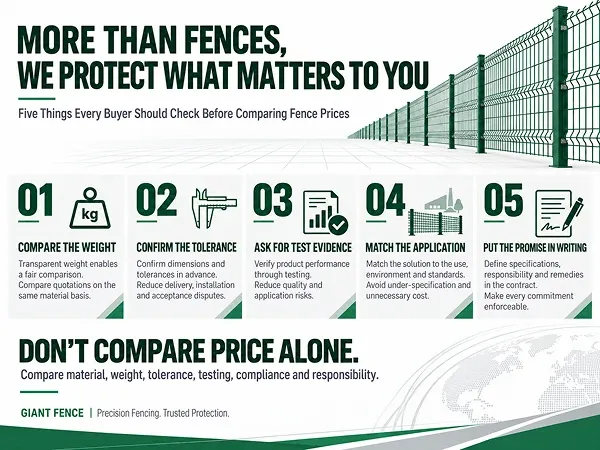
Choosing the right fence requires more than comparing prices alone. This fence buying guide explains the key factors that affect product quality, performance, and long-term value, including materials, specifications, weight, tolerances, testing, application requirements, and supplier commitments. By understanding these factors, buyers can compare fencing solutions more fairly and make more informed purchasing decisions.

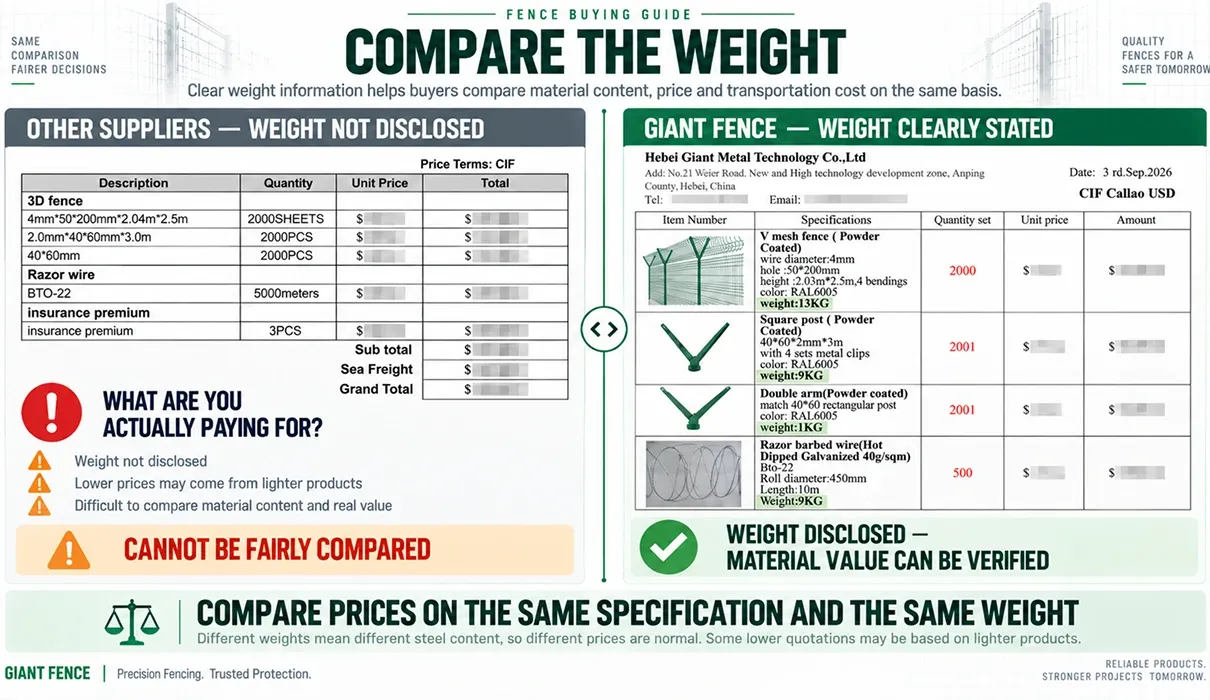
When making a fence weight comparison, product weight is an important factor that should not be overlooked. Even when the listed dimensions and wire diameter appear the same, differences in actual material usage can result in different product weights—and therefore different prices.
At Giant Fence, we clearly state the weight of the fence panels, posts and accessories in our quotations, helping customers understand exactly what they are paying for. If another quotation does not disclose product weight, a lower price may simply reflect less material content or a lighter product.
For a fair comparison, always compare quotations based on the same specifications, the same material requirements and the same product weight.
Compare the weight—not just the price.

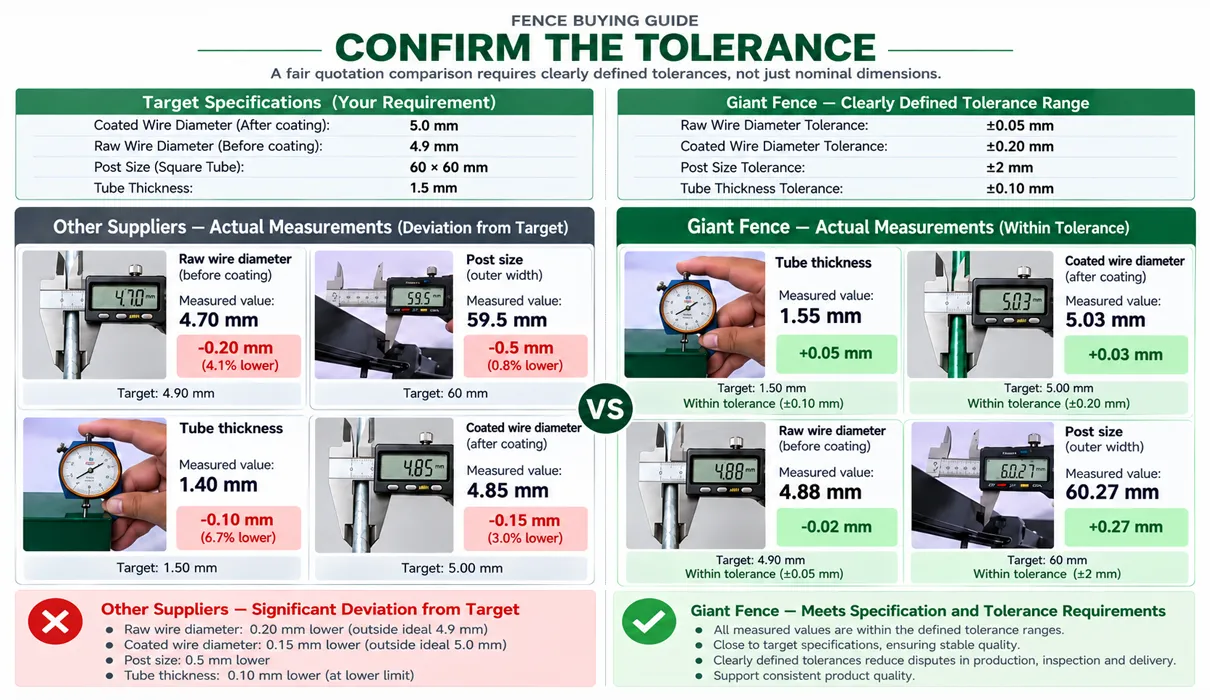
When comparing fence quotations, clearly defined tolerances are essential. The same nominal wire diameter, post size or tube thickness can result in different actual material usage.
At Giant Fence, we define the tolerance range before production, giving customers a clear basis for inspection and acceptance.
Some suppliers only state the nominal size without defining the tolerance. Actual dimensions may then fall on the lower side, reducing material usage and price.
For a fair comparison, compare the same specifications and the same tolerance requirements.
Confirm the tolerance—not just the nominal size.

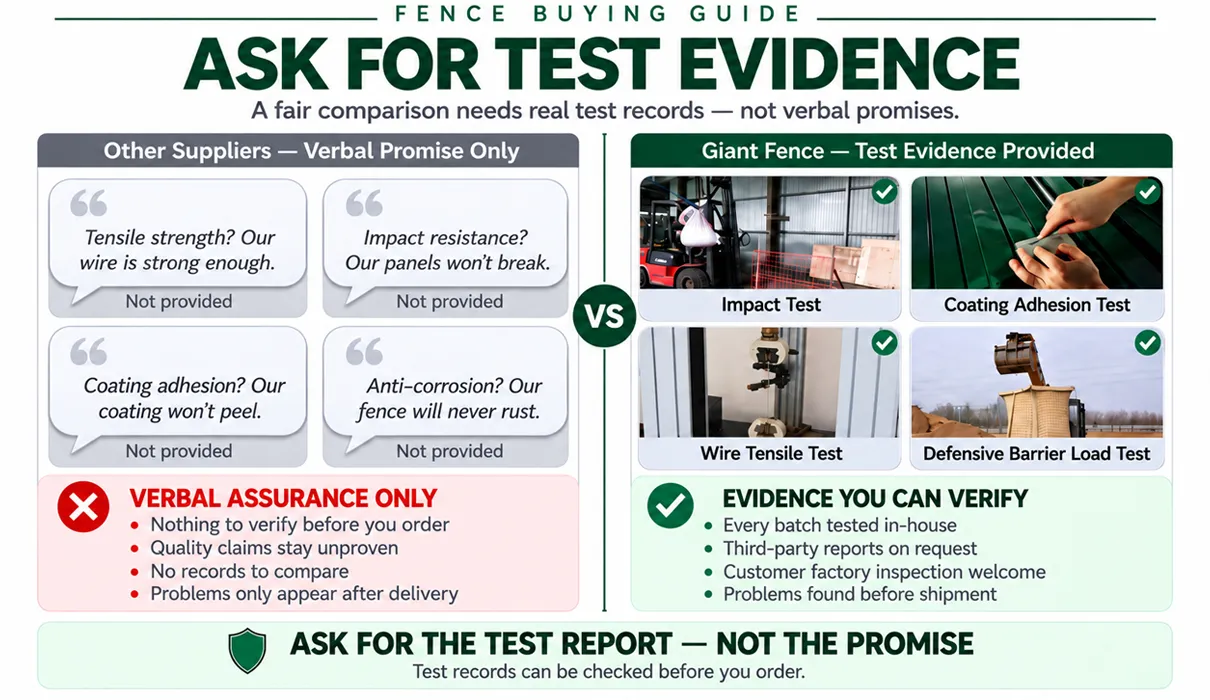
When comparing fence suppliers, words like "strong," "durable," or "corrosion resistant" are not enough. Real test records provide measurable evidence of product performance before ordering.
At Giant Fence, we conduct product testing and maintain records for key performance areas, including impact resistance, coating adhesion, wire tensile strength and load performance. Test evidence can also be provided for customer verification.
If a supplier only offers verbal promises without test methods, results or records, it is difficult to confirm actual product performance.
For a fair comparison, always ask for test evidence – not just promises.
Ask for the test report – not the promise.

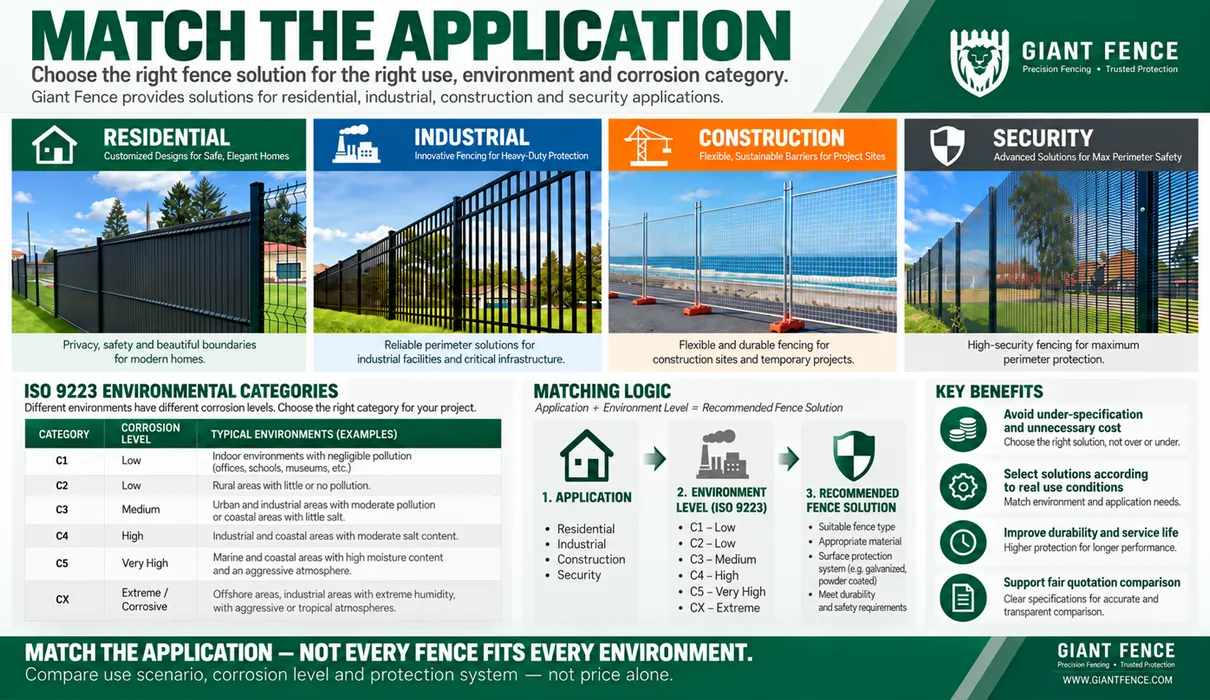
When selecting fence solutions, application and environment must be considered together. Residential, industrial, construction and high-security projects require different levels of strength, durability, corrosion protection and service life.
At Giant Fence, we recommend products based on actual conditions. We also consider environmental corrosivity categories under ISO 9223, from C1 to CX, to determine suitable materials, coating systems and protection levels.
Choosing only by price may result in under-specification, unnecessary costs or shorter service life. The right solution should match both the application and the environment.
For a fair comparison, evaluate products under the same conditions, corrosion category and performance requirements.
Match the application – not just the price.

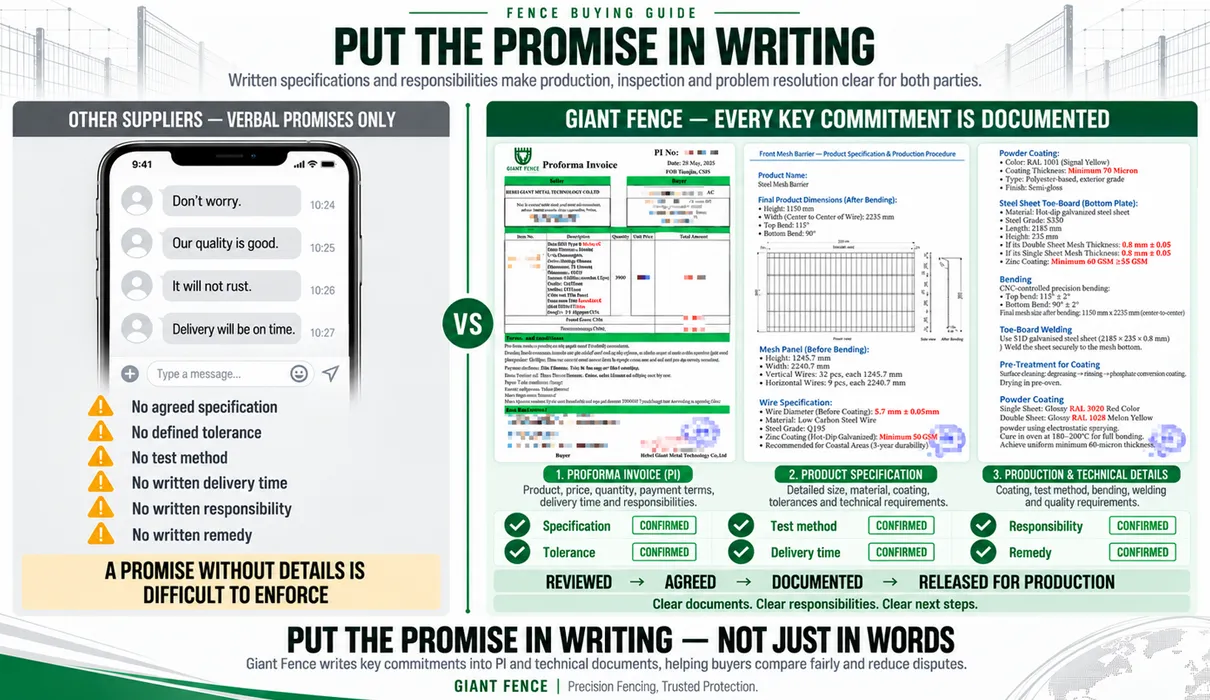
When comparing fence quotations, verbal promises are not enough. Claims about quality, delivery or problem handling are difficult to verify and enforce without written confirmation.
At Giant Fence, key commitments are documented in formal documents such as PI and technical specifications. Product details, tolerances, test methods, delivery time, responsibilities and remedy terms are clearly defined, ensuring both sides understand what has been agreed.
If a supplier only provides verbal assurances, a lower price may come with unclear obligations and hidden risks. Without written records, inspection, delivery control and problem resolution become more difficult.
For a fair comparison, evaluate not only the price, but also whether supplier commitments are clearly documented.
Put the promise in writing – not just in words.