

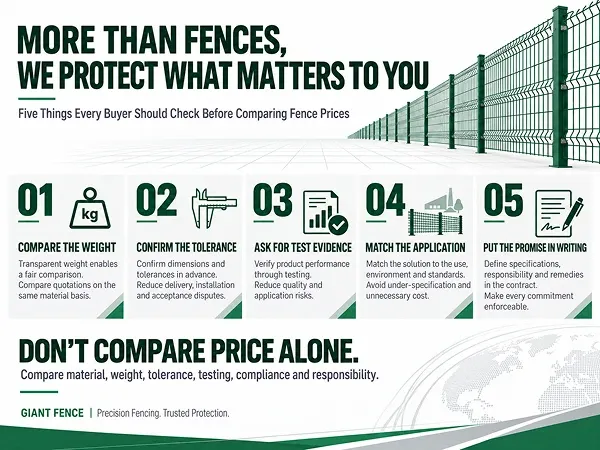

Choosing the right fence requires more than comparing prices alone. This fence buying guide explains the key factors that affect product quality, performance, and long-term value, including materials, specifications, weight, tolerances, testing, application requirements, and supplier commitments. By understanding these factors, buyers can compare fencing solutions more fairly and make more informed purchasing decisions.

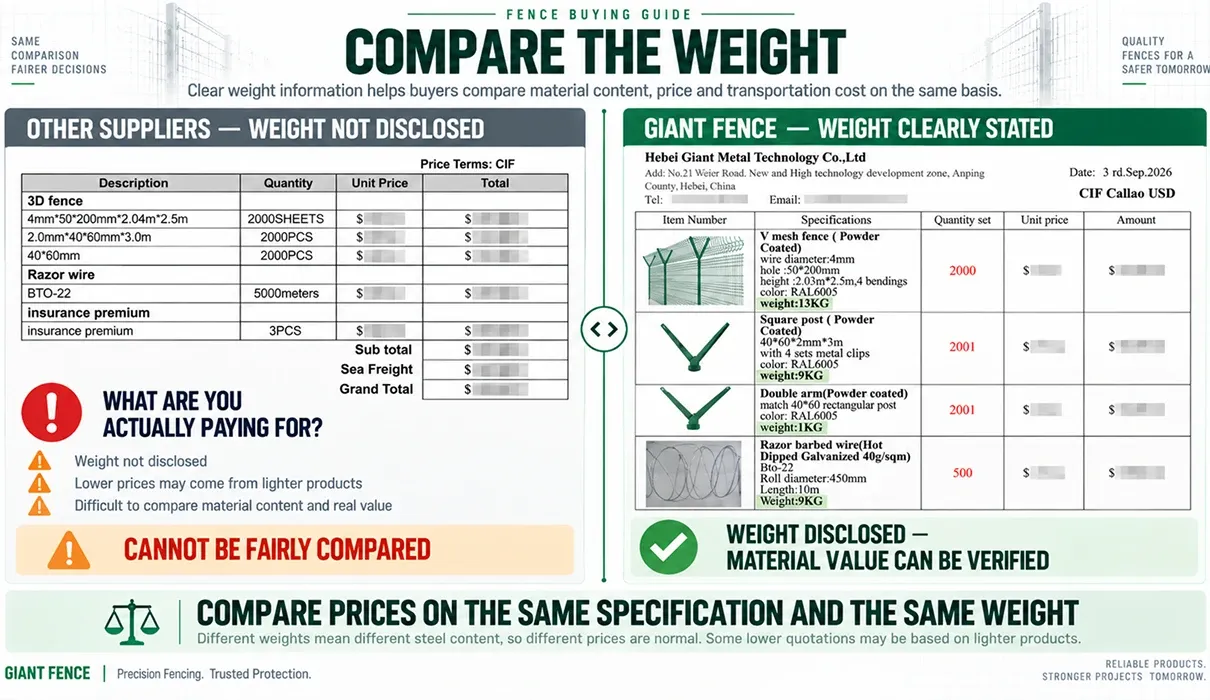
When making a fence weight comparison, product weight is an important factor that should not be overlooked. Even when the listed dimensions and wire diameter appear the same, differences in actual material usage can result in different product weights—and therefore different prices.
At Giant Fence, we clearly state the weight of the fence panels, posts and accessories in our quotations, helping customers understand exactly what they are paying for. If another quotation does not disclose product weight, a lower price may simply reflect less material content or a lighter product.
For a fair comparison, always compare quotations based on the same specifications, the same material requirements and the same product weight.
Compare the weight—not just the price.

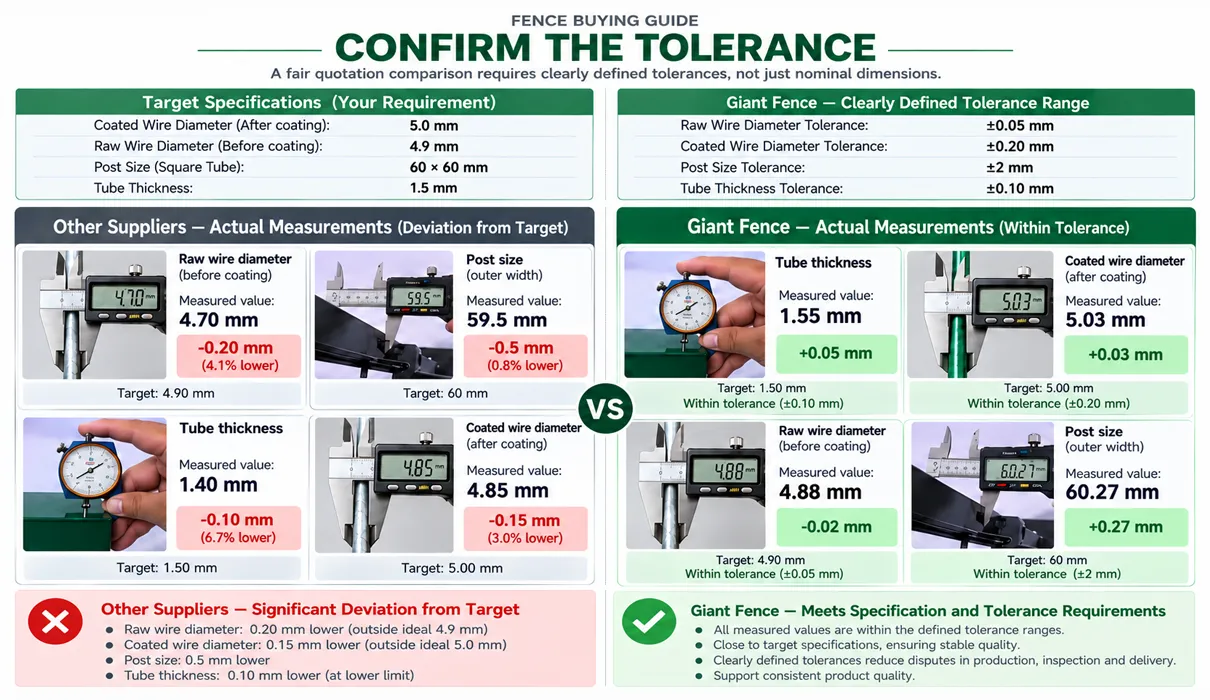
When comparing fence quotations, clearly defined tolerances are essential. The same nominal wire diameter, post size or tube thickness can result in different actual material usage.
At Giant Fence, we define the tolerance range before production, giving customers a clear basis for inspection and acceptance.
Some suppliers only state the nominal size without defining the tolerance. Actual dimensions may then fall on the lower side, reducing material usage and price.
For a fair comparison, compare the same specifications and the same tolerance requirements.
Confirm the tolerance—not just the nominal size.